
Legal support in insolvency, restructuring and business recovery situations
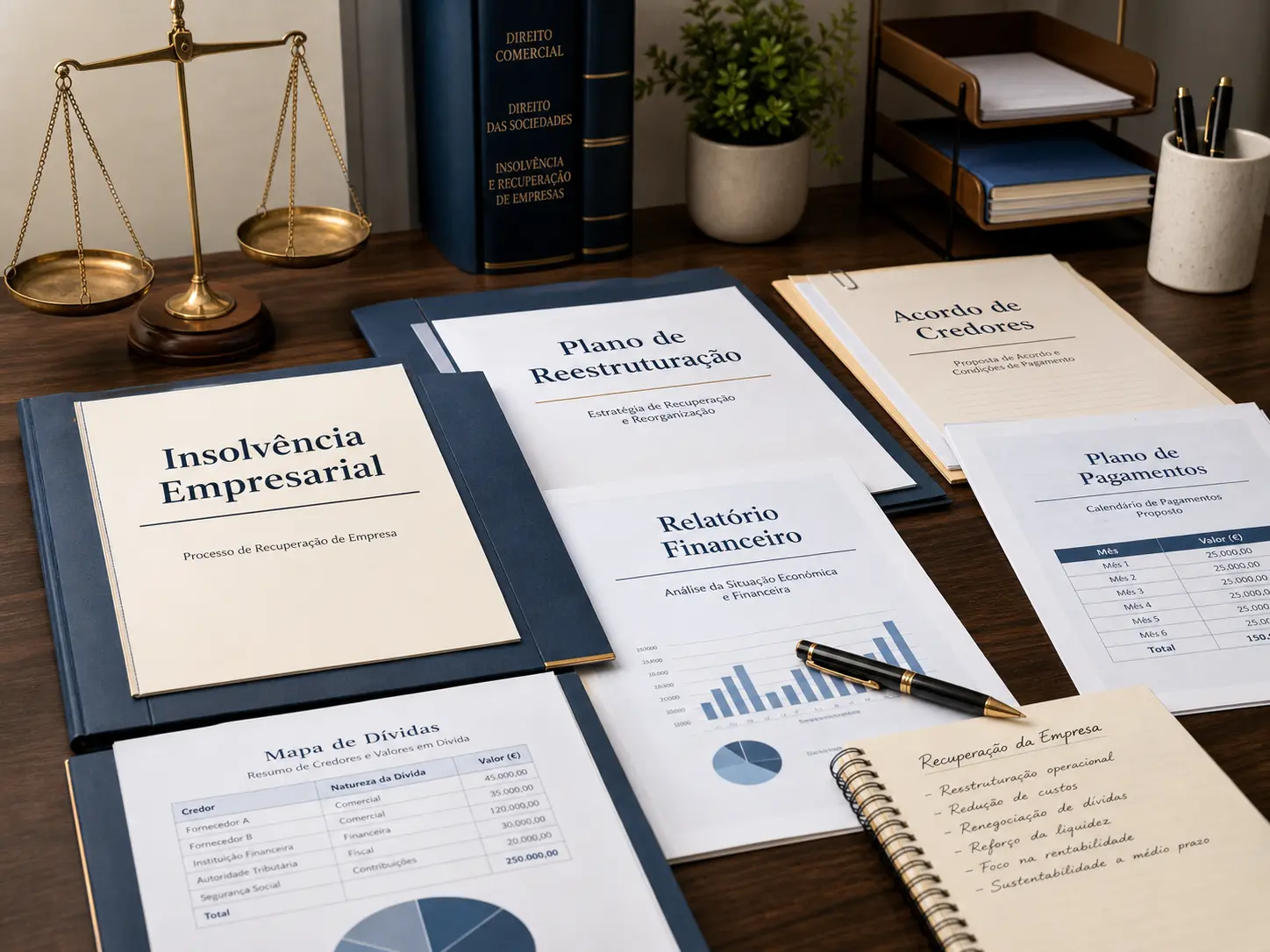
Insolvency and corporate recovery require a rigorous analysis of the company’s economic, financial and legal position. Where there are cash-flow difficulties, accumulated debts, breaches of obligations or a risk of business closure, it is essential to assess the legal solutions available in good time. We assist with analysing the company’s position, dealing with creditors, preparing documentation, negotiating payment plans and supporting insolvency or recovery proceedings. Our approach aims to protect the interests of the company, its shareholders, directors or creditors, as applicable, and to find the most suitable solution within the relevant legal framework.
Areas of practice
We act in a range of situations relating to insolvency, corporate recovery and debt restructuring, assessing risks, liabilities and legal alternatives.
Legal support throughout every stage
We support the company, shareholders, directors or creditors from the initial assessment of the situation through to negotiation, court proceedings or the implementation of recovery measures.
Legal analysis of the company’s situation
We assess contracts, debts, claims, liabilities, notices received and the legal risks associated with the company’s situation.
Defining the appropriate legal strategy
We identify the possible legal solutions, including negotiation with creditors, recovery, revitalisation, insolvency or liquidation.
Negotiation with creditors and involved entities
We assist in preparing proposals, payment plans and communications with creditors, suppliers, financial institutions or other parties involved.
Support throughout the court proceedings
We represent clients in insolvency proceedings, claims for debts, procedural incidents and all other necessary actions.
Frequently Asked Questions
We clarify some of the most frequently asked questions about insolvency, business recovery, debts, creditors and legal restructuring mechanisms.
When should a company consider insolvency?
Insolvency should be considered when the company is unable to meet its due obligations or when its financial situation shows a serious inability to pay. The matter should be assessed promptly in order to evaluate risks and alternatives.
Does insolvency always mean the company will close?
Not necessarily. In some cases, recovery, revitalisation or negotiation mechanisms with creditors may be available that allow the business to continue operating. The solution depends on the company's economic viability and the specific circumstances.
What is the Special Revitalisation Process?
The Special Revitalisation Process is a mechanism intended for companies in a difficult financial situation or facing imminent insolvency, allowing them to negotiate a recovery plan with creditors. Its suitability depends on the company's viability and creditor approval.
Can directors be held liable for the company's debts?
In certain situations, directors or managers may be held liable, particularly where there are legal breaches, wrongful management or an aggravation of the company's situation. Each case requires a specific assessment.
Book your legal consultation
Tell us about your situation. Our team will review your request with rigour, confidentiality and attention to detail.